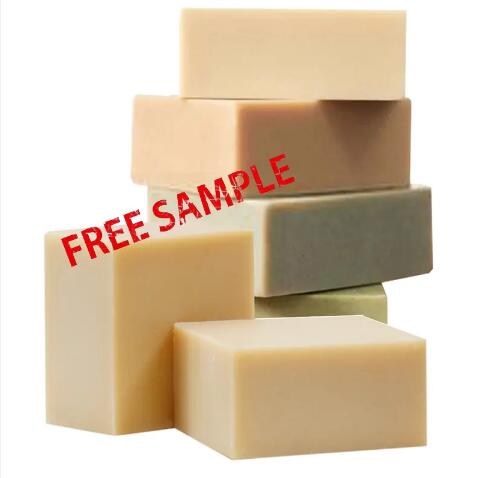

A half-used bar goes soft in the dish, and you wonder if it can fill the pump bottle by the sink. It can, with a grater, hot water and patience. Before you learn how to turn bar soap into liquid soap, check the label, because the bar's ingredients decide how clean the result will be.
Check the bar's label first, because not every bar melts into a clean liquid
Yes, you can turn bar soap into liquid soap at home. Plain soap bars usually dissolve into a smooth, workable liquid. Bars with added oils, scrubs or heavy fillers may turn cloudy or lumpy. The result depends on what the bar is made of.
Can you turn bar soap into liquid soap?
Mostly, yes. True soap is made by reacting fats or oils with an alkali, and it dissolves in hot water. Many "beauty bars" and detergent bars are different. They are built from synthetic cleansing agents (called syndets) and often contain binders that do not melt cleanly. Scrubs, seeds and clay will not dissolve either. They settle or clog the pump.
How to read the ingredient list for a good candidate
Ingredient lists use INCI names. INCI stands for International Nomenclature of Cosmetic Ingredients, a standard naming system used on cosmetic labels. For soap, look for names such as sodium palmitate, sodium cocoate, sodium olivate or sodium tallowate. These are the salts that form when oils meet alkali.
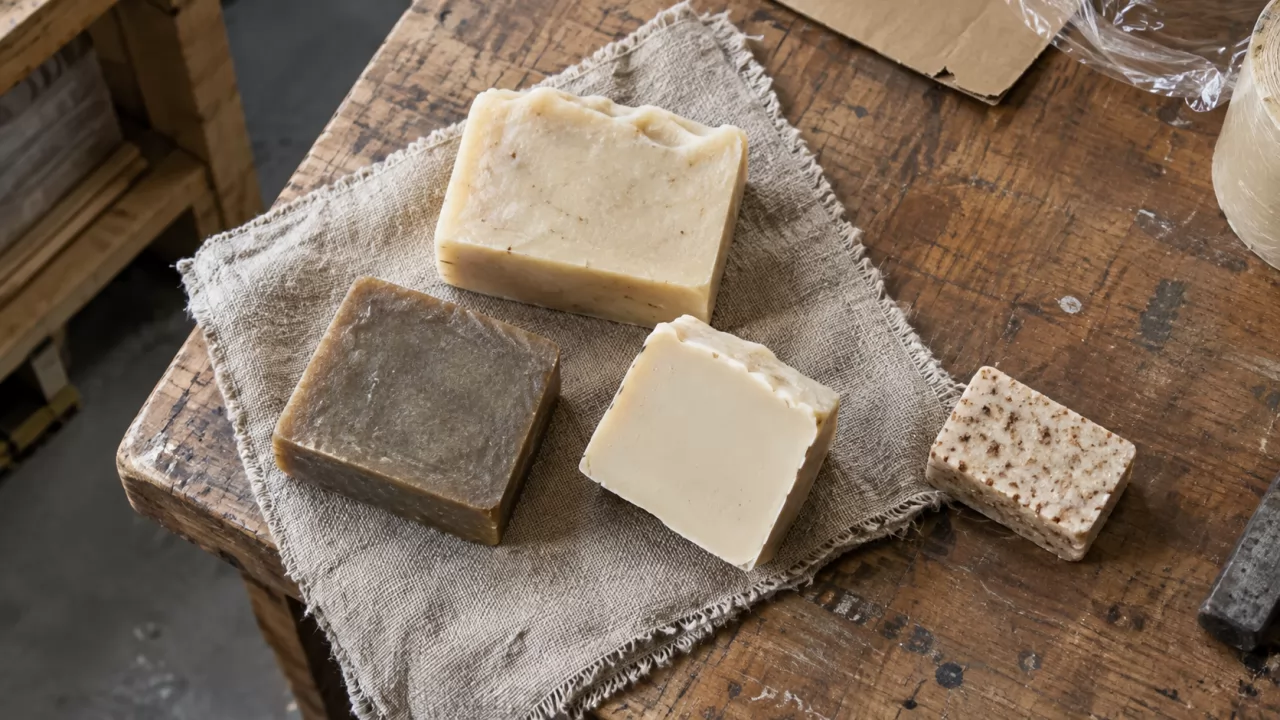
A short list of this kind is a good sign. A long list with many synthetic detergents is a weaker candidate. Fragrance and colour are fine. Scrubs and thick butters are the ones to avoid.
What you need before you start
The kit is small. Most of it is already in your kitchen.
- A box grater with fine holes
- A saucepan with a lid
- A wooden or silicone spoon
- Distilled or boiled-and-cooled water
- A clean pump bottle, rinsed with hot water
- Optional: a little vegetable glycerin and a few drops of fragrance
Distilled water matters because the minerals in hard tap water react with soap and leave a cloudy film. Clean containers matter for a second reason. Homemade soap usually has no preservative, so any germs left in the bottle can grow.
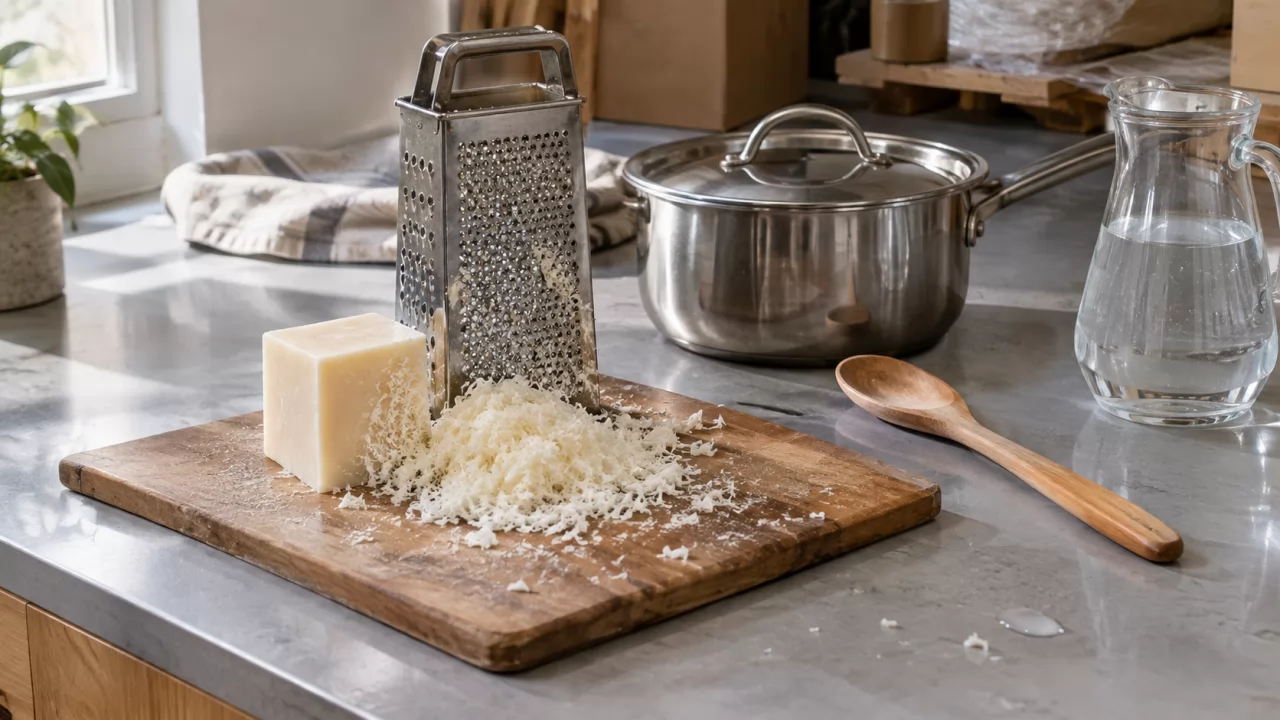
Use a pan you will not cook in afterward, or wash it well. Soap residue is not something you want in the next stew.
How to make liquid soap from bar soap in seven steps
This method suits a grated soap bar liquid soap recipe for hand washing. As a rough guide, many people use about one part packed soap shreds to four to eight parts water by volume. Start at the thinner end and adjust later. Thick is easy to fix. A weak mix needs more soap and another round of heating.
- Check the bar. Confirm it is a plain soap bar with no scrubs, as covered above.
- Grate it fine. Fine shreds melt faster and with fewer lumps. Pack them loosely into a measuring cup to get your volume.
- Measure the water. Pour about four times the soap volume into the pan. Warm it until steaming, but not boiling.
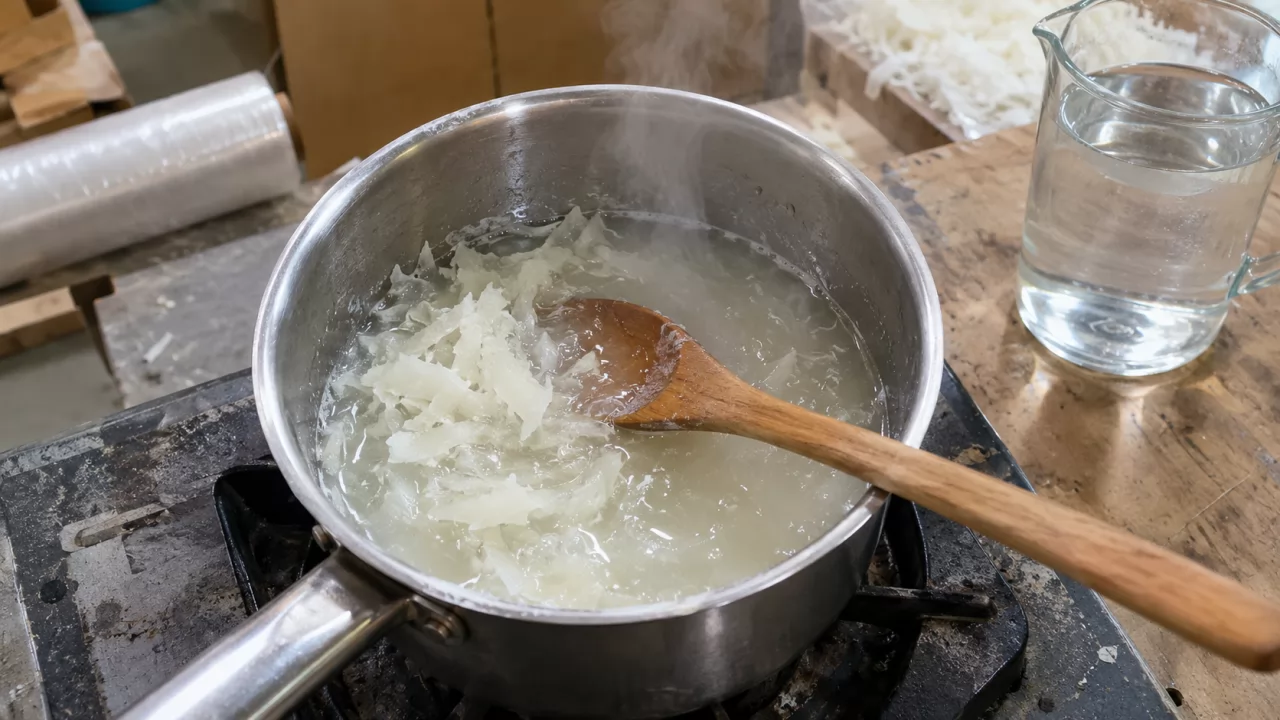
- Add the shreds and stir. Keep the heat low. Stir slowly and often. Caution: do not boil hard. A rolling boil makes heavy foam that can climb over the rim, and hot soap water splashes. Keep the handle turned inward and children out of the kitchen.
- Melt fully. This usually takes 10 to 20 minutes. Stop when no solid bits remain. Cover the pan and take it off the heat.
- Rest the mix. Let it sit for several hours, often overnight. It will thicken as it cools and may set into a soft gel.
- Thin, scent and bottle. Stir in small splashes of distilled water until it pours. Add a little glycerin or fragrance if you like. Use a funnel to fill the bottle.
Melt gently, then rest the mix
Patience is the main skill here. If you skip the rest, you cannot judge the final thickness. The mix at the stove is always thinner than the mix the next morning.
Thin, scent and bottle it
Add water a tablespoon at a time. Stir gently so you do not whip in air. If you add fragrance, keep it light. Strong scent can bother some people.
Patch test first. Put a small amount on your inner arm, wait a day, and watch for redness or itching. Skin reactions vary, and a homemade mix has not been tested the way a made product is.
Three ways to make liquid soap: which one fits you?
You can grate a bar, melt soap flakes, or start from a ready-made glycerin liquid soap base. The table compares them on time, texture and effort.
| Item | What to look for |
|---|---|
| Grated bar melting | Uses leftover bars. Needs grating and an overnight rest. The texture is usually a soft gel that you thin. |
| Soap flakes melting | Skips the grating. Melts quickly and often more evenly. You have to buy flakes. |
| Glycerin liquid soap base | Least effort, since it is already liquid. You mostly add scent. The texture is smooth and closer to shop liquid soap. |
| Best for leftovers | Grated bars. Nothing goes to waste. |
| Best for speed | A ready-made base. No melting or resting. |
If you have a stack of old bars, grating makes sense. If you want a smooth result without fuss, a base is simpler.
Common mistakes that spoil homemade liquid soap
Too little water. The mix sets like a block and will not pump. Add water in small amounts and reheat gently if needed.
Boiling hard. It makes foam and can leave the soap grainy. Keep the heat low and steady.
Using tap water. Hard water leaves cloudiness. Use distilled or boiled-and-cooled water instead.
Storing it too long. Without a preservative, homemade soap can spoil. Make small batches and use them up.
Myth: homemade liquid soap works like store-bought liquid soap
It does not. A melted bar feels different, and its pH is usually different too. Many shop liquid soaps are formulated for a specific feel and pH. Yours is simply melted bar soap. It cleans hands, but it is not the same product.
Myth: stronger scent or more soap means cleaner hands
No. Extra soap mostly makes the mix thick and hard to pump. More fragrance adds smell, not cleaning power.
Fixes for thick, cloudy or separated soap
- Gel lumps: reheat gently with a splash of water and stir until smooth.
- Cloudiness: it is often hard water. Use distilled water next time.
- Weak pump: the mix is too thick. Thin it with a little water.
- Too thin: warm it, melt in more shreds, and rest it again.
- Separation: stir well, or reheat gently and let it rest.
FAQ
How do I melt bar soap into liquid hand soap without lumps?
Grate the bar very fine. Use warm water, keep the heat low, and stir often. Lumps usually come from big shreds or fast heating.
Can I use a grated soap bar liquid soap recipe for the face or for babies?
No, be cautious. This method is aimed at hand washing. Faces and babies have sensitive skin and need a product made for them.
How long does homemade liquid soap last?
Usually a short time. With no preservative, it is best made in small batches. Use clean bottles and throw it out if the smell or colour changes.
Is a store-bought liquid soap base easier?
Yes. It skips grating, melting and resting, as the comparison table shows. The trade-off is that you give up the use of leftover bars.
Want something made for you?
Poleview makes handmade bar soaps. If you want a bar soap or liquid soap made to your own formula or label, send our team a note to ask for a free sample.